


Blog

Aquarium Cat Bed Ideas: 3 Creative Setups Without Live Fish
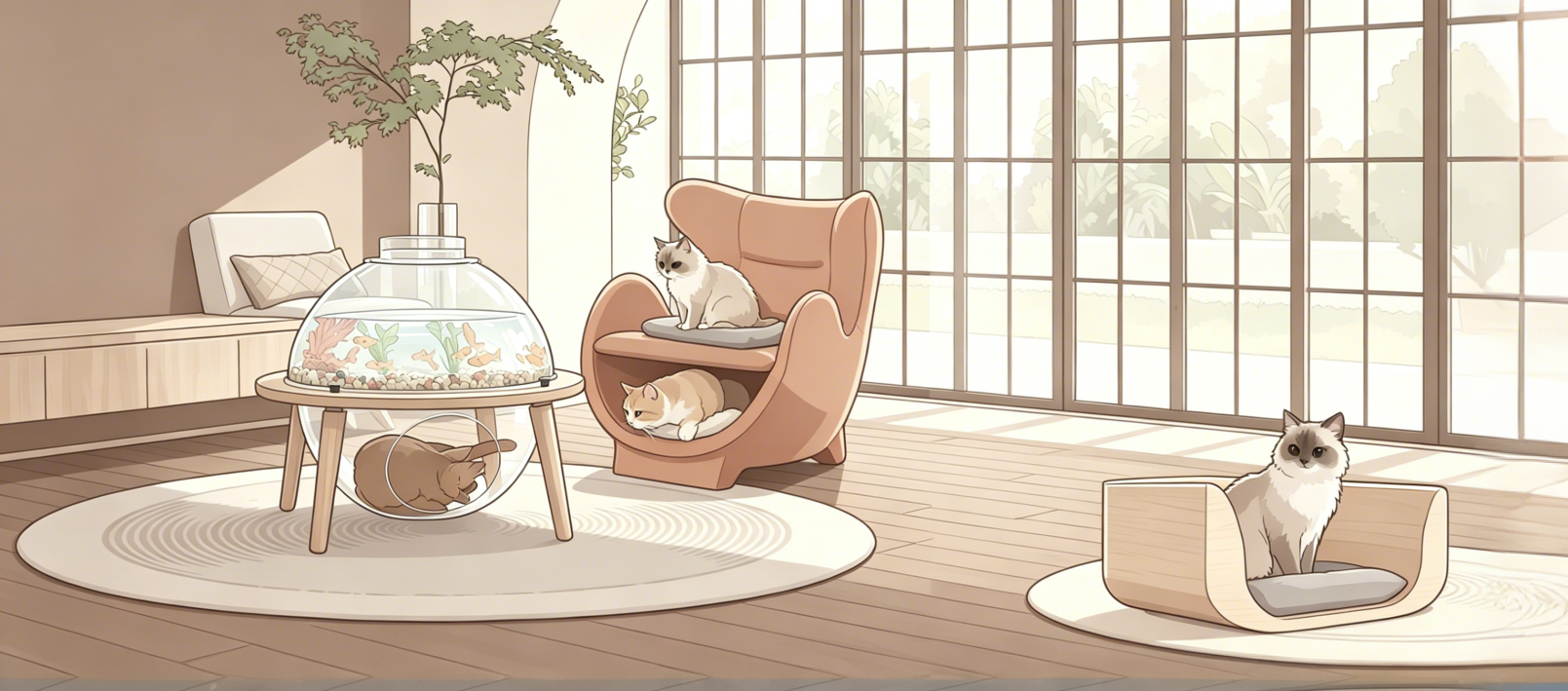
Who says a cat bed has to be just a place to sleep? Above your cat’s resting spot, you can create an entirely different world: electronic fish swimming overhead, a miniature village with its own little story, or an underwater garden that grows over time. The HOOMLET Aquarium Cat Bed combines an upper display area with a separate resting space below. Even without live fish, there are plenty of ways to make it your own. Change the scenery with the seasons, your decor, or a new idea, while your cat enjoys a familiar place to peek out or curl up. And somewhere along the way, you might discover that creating these little worlds is just as much fun for you. Can You Use an Aquarium Cat Bed Without Live Fish? Yes. You can style an aquarium cat bed without live fish by using electronic fish, building a dry miniature scene, or creating a fish-free planted aquascape. Each option offers a different look and level of care. Electronic fish and aquatic plants require water, cleaning, and ongoing maintenance. A dry miniature display skips water care, leaving more room for decorating and experimenting. The aquarium includes a lid, which helps reduce dust and limits your cat’s access to the decorations above. Follow the product’s setup instructions, keep the original openings and ventilation clear, and make sure your arrangement allows the lid to fit properly. 1. Electronic Fish: Give Your Cat an Underwater Channel Love the sight of fish swimming above your cat’s head, but don’t want to keep live fish? Electronic fish bring movement to the scene without the feeding and animal care. Add water and a few aquarium-safe decorations, then introduce the electronic fish. You could keep the look simple with greenery or use rocks and small caves to create a more detailed underwater landscape. You don’t need to fill every inch. Open space gives the electronic fish room to move and keeps the view clear from below. A few thoughtfully placed decorations can be more striking than a crowded arrangement. Your cat might look up and follow the movement—or watch for a moment before getting back to an important nap. Every cat has different interests, so there’s no need to expect constant attention. For you, the fun can start before the electronic fish even enter the water. Choosing colors, rearranging rocks, and trying a different backdrop are all part of making the scene your own. What Care Does This Setup Need? Electronic fish don’t need feeding, but a water-filled aquarium still needs cleaning and water changes as appropriate. Maintain the electronic fish according to their instructions, and use decorations suitable for aquarium use. A good fit if: You enjoy a moving underwater view but don’t want the responsibility of keeping live fish. 2. Miniature Scenes: Bring an Imaginary World Home For a different kind of aquarium cat bed setup, leave the upper tank dry and turn it into a miniature display. A little house, a few tiny trees, and a winding path can be the beginning of a story. You don’t need model-making experience, and you don’t have to finish every detail at once. Start with a theme you love and build from there. A Christmas village is just one possibility. There are plenty of other worlds to explore. A Woodland Cottage Create a quiet forest scene with a miniature cabin, small trees, and a pebble path. Greens, browns, and natural wood tones can echo the furniture and plants already in your room. Place taller pieces toward the back and leave the central viewing area open. This adds depth while keeping the scene visible from below. A Seaside Village A lighthouse, a little sailboat, and pale-colored houses can bring a vacation feeling home. A blue-and-white backdrop helps tie the scene together. You don’t have to recreate a real destination. Borrow a detail from a favorite trip or invent a seaside town of your own. A Seasonal Little World In fall, add warm-colored trees and miniature pumpkins. For Halloween, swap in a haunted cottage or a tiny castle. In winter, bring out snow-covered rooftops and miniature fir trees. You don’t need to rebuild everything each time. Keep the houses and paths, then change a few details to move the same village from one season to the next. A Scene Inspired by Something You Love Look beyond the calendar for ideas. A favorite story, a memorable trip, or your dream garden could all inspire a miniature scene. It doesn’t have to be elaborate. A flower-filled window or a path leading to a lighthouse can give the display a personality of its own. Those small decisions are often what make the creative process enjoyable. What Care Does This Setup Need? A dry miniature scene requires no water changes or water-quality maintenance. The lid helps reduce everyday dust, so changing the scenery is also a convenient time to tidy and clean the display as needed. Choose stable decorations that fit comfortably inside, and avoid sharp edges. If you add lighting, use suitable low-heat LED lights and arrange batteries and cords so they don’t interfere with the lid. A good fit if: You enjoy home styling, crafts, or miniature displays and want a creative project you can revisit whenever inspiration strikes. 3. A Planted Aquascape: Grow a Little Underwater Garden If you enjoy watching plants grow, a fish-free planted aquascape offers another way to style your aquarium cat bed. Aquascaping combines aquatic plants with aquarium-safe materials such as rocks and driftwood to create an underwater landscape. Fish aren’t required for the scene to feel complete. Taller plants can form a backdrop, while shorter varieties leave the foreground open. A little empty space helps define the arrangement and keeps the central view clear. Unlike a miniature village, this display changes gradually on its own. You can watch new leaves appear, adjust the planting, and trim growth to maintain the shape you like. It’s a slower creative process—more like tending a small garden. The greenery can also complement houseplants, wood furniture, and natural colors, helping the aquarium cat bed feel like part of your home. What Care Does This Setup Need? A planted aquarium needs ongoing care, even without fish. Plant selection, lighting, and substrate need to work together, and maintenance may include trimming, water changes, and algae management. Start with a simple layout and plants suited to the conditions you can provide. Use materials intended for aquarium use. A good fit if: You enjoy plant care and want a living underwater landscape without keeping fish. Which Aquarium Cat Bed Setup Fits Your Routine? Setup What It Offers Ongoing Care The Creative Part Electronic fish A moving underwater scene Tank cleaning, water changes, and electronic fish maintenance Arranging the scenery and watching the movement Dry miniature display Flexible themes you can change Occasional tidying and cleaning Building little worlds and changing seasonal details Planted aquascape A growing underwater garden Plant care, water maintenance, and algae management Shaping the landscape as it grows If you want to skip water maintenance, start with a dry miniature display. If movement caught your attention, consider electronic fish. If you already love growing plants, a planted aquascape could become a rewarding project. There’s no schedule to follow. Choose something you’ll enjoy creating and maintaining, then change it when a new idea comes along. A Familiar Spot for Your Cat. A Changing View for You. A cat bed can hold more than an afternoon nap. Today, it might sit beneath a moving underwater scene. Next time, it could have a woodland village overhead. When a holiday arrives, a few new details can bring the little world into the season. The scenery above can change while the resting space below stays familiar. Let your cat decide whether to investigate, watch, or simply sleep through your latest decorating project. And let yourself enjoy the process. Try an idea when it comes to you. Find a place for a miniature piece you love. Add a detail, step back, and see what happens next. You might buy it for your cat—and fall in love with creating little worlds yourself. Explore the HOOMLET Aquarium Cat Bed and make room for your cat’s downtime and your next idea.

A Cat Tree That Looks Like a Real Tree: Bring Nature Home
Imagine a tree growing in your living room—one that belongs to your cat. They climb up the trunk, pause on a branch-like perch to see what you’re doing, then settle beneath the leaves for an afternoon nap. The wood grain, spreading branches, and leafy canopy bring a little woodland character indoors. For your cat, they create a place to explore different heights, find a quiet spot, and watch the household go about its day. That’s the idea behind the HOOMLET Tree Inspired Cat Tower: bringing the shape and character of a tree into your home, with spaces designed for cats and an appearance that fits your living room. A Little Tree-Inspired Living for Indoor Cats For an indoor cat, home is the world they explore every day. Along with room to move across the floor, there’s something to be gained from spaces above it: a platform to investigate, a sheltered corner to curl up in, or a perch with a different view. A tree offers a natural starting point for this kind of design. Its trunk connects different heights, branches create places to pause, and foliage provides pockets of cover. HOOMLET brings those elements together in a tree-shaped cat tower. A solid wood trunk and branches support a layout of platforms, ladders, a hideaway house, and transparent acrylic resting bowls. It gives your cat choices about where to go and where to stay. They might explore the platforms one morning and spend the next afternoon tucked inside the house. An indoor cat tree can’t recreate every part of being in a real tree outdoors. But it can bring some of those climbing, perching, and hiding opportunities into a familiar indoor space. A Favorite Spot Among the Branches Part of a tree’s appeal is that every branch offers a slightly different place to be. A thoughtfully arranged cat tower can offer that same sense of variety. Climb Up, Pause, and Take a Look Around Moving between platforms gives your cat more than one destination. They can stop along the way, stretch out on a perch, or continue toward another level. Sometimes the reward is simply a new angle on the room—and a clear view of whatever you’re doing. The staggered layout creates places to pause throughout the structure, so exploring doesn’t have to mean heading straight to the top. Settle Beneath the Canopy The artificial leaves add depth to the tower’s silhouette and give parts of the structure a sense of leafy cover. Your cat can rest near the foliage while keeping an eye on the room, or retreat into the wooden hideaway for a more enclosed spot. The transparent acrylic bowls offer another place to curl up. Together, the open platforms, house, and bowls provide different resting options for different moods. In a multi-cat home, those separate spaces also give cats more places to choose from. Make Time for a Good Scratch The trunk is part of the daily routine, too. Natural sisal rope wraps the scratching areas, giving your cat a dedicated surface to stretch against and work their claws. With scratching, climbing, and resting spaces in one structure, the tower brings several everyday activities into the same corner of your home. Real Wood, Real Character A cat tree that looks like a real tree needs more than a few green leaves. The shape of the trunk, the direction of the branches, and the texture of the wood all help create a convincing natural form. HOOMLET uses solid wood for the trunk and branches, bringing visible grain and individual character to the design. Those variations give each piece its own details and connect it visually with other natural materials in your home. The canopy uses artificial foliage to complete the tree-like shape without watering or sunlight requirements. Warm wood, textured sisal, and layered leaves give the tower an inviting appearance from across the room, with more detail to appreciate up close. Designed to Belong in Your Living Room Cat furniture often occupies a very visible part of the home. It becomes part of the background to your mornings, quiet evenings, and time with friends. How it fits the room deserves consideration alongside how your cat will use it. A natural wood cat tree can echo the tones of flooring, shelving, or a coffee table. A leafy canopy adds green to a neutral palette, while the branching silhouette introduces softer, less uniform lines. In an Organic Modern living room, the HOOMLET tower can sit comfortably alongside a curved sofa, linen upholstery, and a textured rug. In a Japandi-inspired space, simple furniture and a little breathing room allow the wood and branches to stand out. You don’t need to decorate the entire room around it. Repeating a wood tone or pairing it with a few natural textures can help it feel connected to what’s already there. Just as important is choosing a spot your cat wants to use. A place near your everyday activities lets them enjoy their own space while staying close to you. Your cat naps among the branches while you read nearby. They watch from a platform while you have your morning coffee. The tower becomes part of the way you share the room. Give Your Indoor Tree Room to Spread Out A tree-inspired cat tower needs space for its full silhouette. The base is only one part of the measurement. Branches and foliage reach outward, so check the overall footprint as well as the height before choosing a location. The HOOMLET Tree Inspired Cat Tower stands approximately 86.8 inches tall. To accommodate its branches and canopy, we recommend allowing approximately 59 × 59 inches of space. Check ceiling clearance, nearby furniture, and walking paths. Leave a clear approach so your cat can reach the tower easily, and follow the assembly instructions when setting it up. It also helps to start with your cat’s existing habits. Think about where they already like to spend time and observe the household. A well-chosen location can make the tower a natural extension of that routine. Bring Nature Home—and Give Your Cat a Tree of Their Own Natural materials and greenery can change the feeling of a room. A tree-inspired cat tower adds another layer: a place that becomes part of your cat’s daily life. As they explore the platforms, rest beside the leaves, or disappear into the hideaway, the scene changes throughout the day. The HOOMLET Tree Inspired Cat Tower brings that idea home, creating a richer indoor space for cats and a natural focal point for the people who live with them. Explore the HOOMLET Tree Inspired Cat Tower and make room for a little woodland living.

Coffee Table With a Cat Bed: A Smarter Way to Share Your Living Space
If you already have a coffee table in your living room, why should you also need to find space for a separate cat bed? That’s the idea behind a coffee table with a cat bed: combining an everyday living room table with a dedicated place for your cat to rest, play, and stay close to you. For you, it’s a functional coffee table for drinks, books, and décor. For your cat, the space underneath becomes a place to lounge, explore, play, and watch what’s going on around them. Best of all, you don’t have to be in separate corners of the room. You use the space above. They enjoy the space below. And you’re still together. What Is a Coffee Table With a Cat Bed? A coffee table with a cat bed, sometimes called a cat coffee table, is multifunctional furniture that combines a traditional coffee table with a built-in space designed for cats. It’s more than simply placing a cat bed under a regular table. A thoughtfully designed cat coffee table considers how cats actually use the space: Is it easy to get in and out? Is there enough room to move around? Can they see what’s happening nearby? And does the piece still work well as real living room furniture? With an arch-style design, multiple open entrances can create a connected space beneath the table where cats can move freely, rest, explore, and pass through from different directions. So it’s more than just: Coffee Table + Cat Bed It can also function as a Cat Hideaway + Play Space + Shared Space. More Than a Cat Bed: A Place to Rest, Play, and Explore Cats rarely use a space for just one thing. They might be napping one minute and batting at a toy the next. They may enter through one opening, wander through the interior, and pop out from another arch a few seconds later. That flexibility is one of the biggest differences between an open cat coffee table and a traditional enclosed cat bed. Multiple archways give cats the freedom to choose how they enter and exit, while the open interior provides room for both lounging and movement. Hanging toys near the entrances can also turn the space beneath the table into an everyday cat play space. The furniture doesn’t tell your cat, “This is where you sleep.” They get to decide whether they want to rest, hide, watch, explore, or play. Can a Cat Coffee Table Work for Multiple Cats? If you live with more than one cat, a traditional single-entry cat bed can sometimes feel limiting. A cat coffee table with a roomy interior and multiple openings gives multiple cats more flexibility to use the space at the same time. They can enter from different sides, lounge in separate areas, play together, or simply share the space. One cat might be resting while another is exploring or playing nearby. When choosing cat furniture for multiple cats, it’s worth looking for: Enough interior room for more than one cat Multiple entrances and exits Easy movement from different directions Space that supports both resting and play For multi-cat homes, good design isn’t always about adding more individual cat beds. Sometimes it’s about creating one space that can be used in more ways. A Cat Coffee Table That Keeps You Connected Most solid coffee tables visually separate the person above from the cat underneath. A smoked-glass tabletop creates a very different experience. When your cat is inside the table, you can still see them through the glass. And when they look up, they can see you too. You can sip your coffee while watching them play below. You can sit nearby with a book and glance down to find them curled up asleep. Even moving your hand across the glass can become a simple moment of interaction. So the glass isn’t just a design feature. It helps keep the two spaces connected: Your everyday life happens above. Their little world is below. And you can still see each other. How to Choose Cat Furniture for Your Living Room When choosing cat furniture for the living room, it’s not enough to ask whether your cat will like it. It also has to work as part of your home. 1. Does It Work as Real Furniture? If it’s a cat coffee table, it should first function well as a coffee table. The tabletop should be practical for everyday use without sacrificing basic furniture functionality just to add pet-friendly features. 2. Is There Enough Space for Your Cat? Don’t focus only on whether there’s an entrance. The interior should give your cat enough room to comfortably rest, turn around, move, and explore rather than simply looking like a cat hideaway from the outside. 3. Is It Easy to Enter, Exit, and Explore? Multiple open entrances give cats more freedom to choose their own route and can be especially useful in multi-cat homes. 4. Does It Belong in Your Living Room? Cat furniture often stays in your home for years, so shape, materials, and color matter too. Good cat-friendly furniture shouldn’t make you choose between your cat’s needs and your own sense of style. Cat Furniture Can Be Part of Your Home Décor Traditional pet furniture often looks like something that was added to the room afterward. Modern cat furniture can take a different approach: design it as furniture first, then integrate the cat-friendly features naturally into the piece. A round silhouette can soften the visual weight of a larger table. Natural wood tones pair easily with sofas, wood flooring, and woven rugs. Repeating archways add an architectural element, while smoked glass keeps the overall look lighter and warmer. A simple way to judge whether cat furniture truly works in a living room is to ask: If you ignored the cat-friendly features for a moment, would you still want this piece in your home? If the answer is yes, the design is doing more than hiding pet furniture. It’s genuinely combining home décor and pet-friendly function. A Coffee Table Designed for You and Your Cats The HOOMLET Archway Cat Coffee Table brings together a round coffee table, a cat resting area, and a play space in one piece of furniture. The smoked-glass tabletop works for coffee, books, and everyday décor, while the multiple archways below give cats space to rest, move through, watch, and play. The open layout also makes the interior more flexible for households with multiple cats. And because of the glass top, you and your cats can still see and interact with each other. It doesn’t just answer the question: “Where should I put the cat bed?” It asks something more interesting: If people and cats already share the same living room, why shouldn’t the furniture be designed for both? You can enjoy your coffee while they play below. You can read on the sofa while they nap underneath. You each have your own space, while still being close to each other. That’s a smarter way to share your living space. View the Archway Cat Coffee Table →

Inside the HOOMLET Corner Litter Box: Design, Materials & Two Ways to Fit Your Home
A litter box may be a simple everyday product, but its shape, materials, and structure can make a big difference in how well it works for both cats and the homes they share with us.That's why we designed the HOOMLET Corner Litter Box around one simple idea: make better use of the corner. From its triangular footprint and stainless steel litter tray to its removable enclosure and optional planter design, every part serves a practical purpose. 1. Why a Triangle?A Shape Designed Around the CornerMost traditional litter boxes are rectangular, even though they're often placed against a wall or pushed into a corner. That can leave awkward gaps behind the box while taking up more usable floor space in front of it.The HOOMLET Corner Litter Box uses a triangular shape designed to sit naturally where two walls meet. It makes use of space that might otherwise stay empty while keeping more of the room or walkway open.That makes it especially practical for bathrooms, laundry rooms, entryways, living rooms, hallway corners, and even awkward spaces under the stairs. 2. Why We Chose 304 Stainless SteelStainless Steel Where It Matters MostThe litter tray is the part of a litter box that faces the most demanding everyday use. It comes into direct contact with litter, moisture, waste, and repeated scratching, so material choice matters.That's why HOOMLET uses a 304 stainless steel litter tray. Its non-porous surface is easy to wipe and wash, and unlike plastic, it is less prone to absorbing odors or developing deep scratches over time.The result is a litter tray designed for easier everyday cleaning and longer-lasting use. 3. Stainless Steel Inside. A Finished Look Outside.A stainless steel litter tray is practical, but that doesn't mean your litter box needs to look like a metal container sitting in the middle of your home.HOOMLET combines the stainless steel interior with a fully finished exterior, so exposed metal doesn't dominate the appearance of the litter box. The result feels softer and more intentional in living spaces while keeping stainless steel where it matters most.It's a balance between practical materials and home-friendly design.4. A Double-Door Design for Cats—and Easier CleaningLess Hassle. More Room to Clean.The inner swinging door gives cats easy everyday access. When it’s time to scoop, simply lift the outer frame to create a wide cleaning opening—no need to remove the enclosure.The frame stays open on its own, so there’s nothing to hold while you scoop. Just lift, scoop, and close—making everyday litter box cleaning quicker and easier. 5. Designed to Keep More of the Mess InsideOverlapping Shell DesignCats don't all use a litter box the same way. Some dig enthusiastically, while others tend to spray higher along the sides of the box.The overlapping shell structure helps direct liquid downward rather than toward the seams, while the raised enclosure helps contain litter kicked or scattered during digging.Built-In Carbon FilterThe enclosed configuration also includes a built-in carbon filter to help reduce odors around the litter box and keep the surrounding space fresher.Together, these details are designed to make an enclosed litter box easier to live with every day. 6. One Litter Box, Multiple Ways to Use ItFrom Open to Fully EnclosedNot every cat prefers the same litter box setup. Some feel comfortable in a fully enclosed box, while others prefer a more open entrance or no door at all.That's why the HOOMLET Corner Litter Box is designed with removable components. It can be used in different configurations—from a more open litter tray setup to a fully enclosed litter box.You can also remove the door while keeping the enclosure in place, giving cats that dislike swinging doors a wider, unobstructed entrance.The idea is simple: let the litter box adapt to the cat, rather than expecting every cat to adapt to one fixed design. 7. Designed for Cats of Different Sizes and AgesThe interior provides room for cats up to 25 lbs, while the wide, low-step entrance makes getting in and out easier for kittens, larger cats, and older cats that may prefer a more accessible entry.8. Two Designs, One Corner-Saving IdeaThe HOOMLET Corner Litter Box and the Planter Version share the same basic idea: use the corner more efficiently while giving your cat a comfortable, practical litter box.The difference is how each version fits into your home. Explore the Triangle Corner Litter Box →

8 Smart Places to Put a Litter Box in a Small Home | HOOMLET
Finding the right place for a litter box can be tricky in a small home or apartment. It needs to be easy for your cat to access, convenient to clean, and ideally somewhere that doesn't take over your living space.The solution may already be hiding in plain sight: an unused corner. From bathrooms and laundry rooms to the space under the stairs, here are eight smart places to put a litter box while making better use of the space you already have.1. An Unused Bathroom CornerAn empty corner beside the vanity or shower can be a practical spot for a litter box. Bathroom floors are usually easy to clean, and keeping the box against the walls helps preserve more open floor space.For smaller bathrooms, a triangle corner litter box can fit into the corner more naturally than a traditional rectangular box.2. A Laundry Room CornerLaundry rooms are another great option, especially when there's unused space beside the washer, dryer, or storage cabinets. These areas are typically easy to clean and separate from where food is prepared.In a narrow laundry room, a space-saving corner litter box can help keep the walkway clear while giving your cat a dedicated spot. 3. Under the StairsThe space under a staircase is often too awkward for furniture but just right for a litter box. A triangle-shaped box can tuck naturally into this unused area without extending too far into the walkway.Just make sure your cat can enter and exit comfortably and that the area has enough ventilation.4. A Hallway CornerHave an empty corner at the end of a hallway or beside a bookshelf? It may be more useful than it looks.5. Near an EntrywaySmall corners near an entryway, mudroom, or doorway between rooms can also work well. These transitional spaces are often too small for furniture but large enough for a compact litter box.Choose a spot that doesn't block the door or interfere with everyday foot traffic.6. A Living Room CornerSometimes the living room is the most practical—or only—option. Instead of placing the litter box along an open wall, try a quieter corner beside a bookshelf, cabinet, or console.If the litter box will be visible in your main living space, an enclosed or planter-style litter box can help it blend more naturally with your home décor. 7. A Home Office CornerA quiet corner beside a desk or bookshelf can work well for cats that prefer a little more privacy. It also makes use of floor space that might otherwise sit empty.For a small home office, a corner-fitting design can leave more room around your desk and chair. 8. Any Awkward, Unused CornerTake another look around your home. The corner beside a bookshelf, the end of a hallway, or a small recessed area may be difficult to use for furniture—but perfect for a litter box.A triangle litter box is designed to make better use of these overlooked spaces, keeping more of the center of the room open for everyday living.Make Better Use of Every CornerThe HOOMLET Triangle Corner Litter Box is designed to fit into unused corners, with a space-saving triangular shape and a 304 stainless steel litter tray that's durable, non-porous, and easy to clean. For more visible living spaces, the Planter Version adds a decorative touch while keeping the same corner-friendly footprint.A better litter box setup doesn't always require more space—just a smarter use of the space you already have.Explore the Triangle Corner Litter Box →

From 2025 to 2026: @plainjayhn7 & Mewowilyn‘s Hoomlet journey
We don't forget the ones who believed in us first. When you're a small brand building something new, every customer matters. But some customers stay with you — and that's a different kind of special. @plainjayhn7 and Mewowilyn are that kind of special. 2025.3.7: The Beginning In 2025, @plainjayhn7 got her first Hoomlet. Back then, the idea of a fish tank and a cat cave combined into one was still new — unusual, even. But Mewowilyn didn't care about that. She just liked it. You'd see her lying in the cat cave, looking up at the fish swimming above — her own personal "cat TV." Sometimes she'd walk around the tank, like a little guard patrolling her territory. At the same time, @plainjayhn7 slowly turned the tank into a real ecosystem. She kept sharing its progress: plants growing, water stabilizing, fish swimming happily. Every photo and video captured this little world coming to life. No sponsorship. No script. Just a real cat who loved her tank cave. And a real user who cared for his ecosystem. 2025 → 2026: Still Going Months passed. Then a year. Other products come and go. But Mewowilyn stayed with her Hoomlet. @plainjayhn7 kept sharing the tank's journey — greener plants, more active fish, a more balanced ecosystem. We watched from afar, quietly grateful. Not every design works for every cat. But this one worked for Mewowilyn. And that meant everything to us. 2026: An Upgrade, On Us When we launched Gen 3 — bigger tank, built-in filtration, air pump, and one-key drain — we knew who deserved to try it first. So we sent @plainjayhn7 the new Gen 3. On us. Not because we needed a post. Not because it was a "collab." Because long-term users deserve the best we can make. Mewowilyn's Verdict? Same cat. Same love. Better tank. No adjustment period. No confusion. She still lies in the cave watching fish. Still walks around like she owns the place. Just a happy cat in a better home. And @plainjayhn7? She kept building her ecosystem — just with more space now. What This Means for You If you're thinking about getting a Hoomlet for your own home, here's what @plainjayhn7 and Mewowilyn's story tells you: This isn't a one-week wonder. Real users have been using Hoomlet for years — and still enjoy it. We care about the people (and cats) who use our products. We don't just sell and disappear. We keep improving. And we bring our longtime users along with us. Thank you, @plainjayhn7 and Mewowilyn. You've been part of the Hoomlet story longer than most people know. And we're grateful for every single day. — Hoomlet

Three Years. Three Generations. One Belief: Good Enough Never Is.
The Beginning of an "Impossible" Idea In 2023, we had an idea: could a fish tank and a cat cave be combined into one? Not a rough patchwork of "tank on top, cave below." But a true coexistence — fish swimming in light, cats watching from the shadows, and people sharing a piece of quiet, beautiful home design with their pets. The idea was exciting. The reality was tough. We quickly learned why almost no one in the market was doing this:Because it's incredibly hard. Cats scratch, paw, and love to lie on top of things Fish need stable water quality, oxygen, and filtration People want something beautiful, safe, and easy to maintain Three needs, three sets of logic — and they often conflict with each other. But we refused to compromise. So, three years. Three upgrades. 2023 · Gen 1: We Made It Happen. The Idea Became Reality. With the first generation, we finally turned an "impossible" idea into a real, usable product. A fish tank on top. A cat cave below. Light passing through the water, falling onto the cat. In that moment, we knew — this was worth doing. The idea, for the first time, truly became reality. It delivered everything we originally promised: a fish tank, a cat cave, and a beautiful piece of home furniture. We put it into the hands of our first users — excited, hopeful. And then, we started listening carefully. 2024 · Gen 2: We Changed Because We Listened After Gen 1 launched, many users gave us warm feedback — and honest suggestions. Some said, "My cat loves it, but he seems a little tense. He doesn't fully relax."Others said, "The transparent cat cave doesn't seem to give my cat a sense of security."And some said, "I have a large cat. It's a bit cramped inside." We listened to every single one. So with Gen 2, we made two key changes: Transparent cat cave → Dark tea-colored cat caveThis gives cats a sense of being "wrapped in" security, no longer exposed to light and open views. They can curl up peacefully and observe with confidence. Significantly larger cat cave spaceNot just "enough" — but room for cats to move around more freely, to turn, stretch, and change positions comfortably. At the same time, larger cats can now easily fit — no cat is left out. This upgrade wasn't because the first generation wasn't good enough. It was because our users told us: it can be even better. 2025 · Gen 3: A Complete Evolution for a More Peaceful Coexistence By the third generation, we had gathered even more feedback from real-life use. Users began focusing on deeper questions: the long-term health of the fish, their cat's safe exploration of the product, and whether the entire system could truly integrate into daily life. So Gen 3 became a complete evolution: Significantly larger water volumeTotal water capacity increased by a full 12 gallons compared to Gen 1. Fish have more space to swim freely, water quality becomes more stable, and maintenance is noticeably easier. Upgraded filtration systemA more efficient built-in filtration system ensures better water flow, easier water quality management, and significantly reduced water change frequency. Integrated aeration systemProviding ample oxygen for your fish — helping them live healthily and actively. This isn't an "extra feature"; it's a core necessity for long-term fishkeeping. Full-coverage scratch-resistant lidThe lid structure has been completely upgraded to provide effective, full-coverage protection. Cats can rest and explore safely on top, while fish enjoy a secure world of their own below. This isn't a single point of improvement. It's a comprehensive leap from "good to use" to "truly worry-free." Our Belief: Good Can Always Be Better Over these three years, many people asked us:"Why keep upgrading across three generations?""Is a fish tank cat cave really worth this much time?" Our answer has never changed: Because every piece of feedback represents the trust a real user has taken the time to give us.And we will not let that trust down. Gen 1 brought our idea to life.Gen 2 listened to our users.Gen 3 delivers a more complete answer. We don't deceive ourselves. And we won't let you down. No shortcuts.No "good enough." Three years. Three generations. One belief. HoomletDesigned for people who love their pets — and thoughtful home design.

The Aquarium Cat Bed: An Idea That Sounded Strange (Until It Wasn't)
If three years ago you had told me I'd spend years figuring out how to combine a fish tank with a cat bed, I probably would have laughed. "Cats and fish? Aren't they natural enemies?" But that's exactly what happened. How It Started: Leo and an Old Fish Tank Leo is one of our three cats. He's quiet, curious, and loves finding a cozy corner where he can stay for hours. Three years ago, a friend moved away and left behind an old fish tank. It ended up in a corner of our living room, with two fish swimming quietly inside. I thought I'd deal with it later. But Leo made the decision for me. He jumped onto the cabinet next to the tank, sat down, and started watching. Not just a casual glance. He was focused, quiet, and looked like he was studying something. He watched for a long time. Long enough that I started to wonder: what was in that tank that he found so fascinating? The Question That Stuck With Me I started watching Leo. And the other two — Flash and Simba. It wasn't just Leo. All three were drawn to the tank. Not in a "I want to catch them" way. More like "I want to sit here and watch." That's when it hit me: a fish tank isn't just a trap with unreachable prey. It's a window. A safe space for a cat to observe, focus, and sink into. The light refracts. The fish glide. There's a quiet, steady rhythm that never stops. It soothed the cats. And honestly? It soothed me too. Then I asked myself a question: What if we brought the cat bed and the fish tank together? Not so the cat could catch the fish. But so the cat could inhabit that front-row seat. The Real Challenge: Not Just Function, but Integration Putting a fish tank and a cat bed together isn't technically hard. The harder question was: can this piece actually become part of the home? For too long, pet furniture has been tucked into corners, disconnected from the rest of the space. It takes up room without becoming part of the room. We didn't want to make more of that. So designing this wasn't about "making something a cat can use." It was about making a piece of furniture that happens to work for a cat too. That meant: A design quiet and restrained enough that it doesn't shout for attention Materials and colors that can sit naturally next to your sofa, your shelves, your side table Something that doesn't look like a science experiment, no matter where you place it We went through many versions. And with each one, we asked ourselves the same question: Does this truly belong in a home, or is it just taking up space? Until we finally felt sure: it does. At its core, it's designed with a quiet, refined aesthetic. It blends into your home, accents the corner it sits in, and brings a sense of life to the space. What Changed for Leo (and for the Home) When we finally had a working version, Leo became its most loyal user. Before, he'd wander around in the afternoon, occasionally scratch the sofa. Not hungry. Not wanting to go out. Just… bored. Now, around 4 pm, he climbs into the bed, looks up at the fish, and stays. Sometimes for over half an hour. No more staring at the wall or sleeping the day away. He has his own "fish channel" now — a little underwater world that never stops playing. Flash and Simba come by to visit sometimes. But Leo seems to have claimed that spot as his own. The sofa gets a break. And the home has gained a quiet corner that didn't exist before. The light refracts. The fish glide. There's a gentle rhythm to it that calms the mind, lifts the mood, and brings a little life back into the room. A friend who tried it said something that stuck with me: "I used to think keeping fish was too much work. Now I'm actually researching it — for my cat. We have a shared project now." That's when I knew we had done something right. The Question We Get Asked Most "Doesn't your cat keep trying to catch the fish?" At first, yes. Curiosity is instinct. Any new thing in the home gets investigated. But cats quickly figure out that the glass is there. The paw can't reach through. And then they switch from "catching" to "watching." Which is exactly what we wanted to give them. A cat that isn't bored is a happier cat. A happier cat makes for a calmer home. What We Hope You Take Away We hope you're bringing home more than just a piece of furniture. A reason for your cat to stay engaged.An excuse for you to sit down, watch the cat watch the fish, and just… pause for a few minutes.A choice that works for your cat's instincts and your home's aesthetics. We spent three years thinking about whether cats and fish could ever coexist peacefully. The answer turned out to be: they already can. They just need the right design. — The HOOMLET Team

10 Strategies for Your Indoor Cat's Happiness
The gentle purring and soothing kneading of a happy cat are sights cherished by cat parents. However, behind this tranquility, indoor cats face unique challenges, from a lack of natural hunting opportunities to confined spaces. Understanding these challenges is crucial for creating a joyful environment. Explore our guide on fostering your indoor cat's happiness with practical tips. Bird-Watching Bliss: Craft an indoor bird-watching haven for your cat. Position a perch by the window, complemented by an outdoor bird feeder. This not only entertains your cat but safeguards the birds. Companionship Dynamics: Introduce a second cat to enhance your indoor cat's environment. Adoption from local shelters provides companionship and mutual engagement. Elevated Adventures with Climbing: Satisfy your cat's climbing instinct with cat trees or shelves. These not only encourage physical activity but also offer a distinctive feline perspective. Catnip Allure: Intrigue your cat with catnip in various forms, be it dried sachets, interactive toys, or refreshing spritzes. For catnip enthusiasts, it's a delightful way to keep them engaged. Active Feline Lifestyle: Explore a diverse range of cat toys, from classic mice to feathered teasers and tech-savvy options. Regular play ensures both mental stimulation and physical activity. Nurturing the Inner Predator: Simulate the thrill of the hunt indoors by hiding treats in clever spots, freezing them in ice cubes, or using treat-dispensing puzzles. These techniques echo those used for big cats in zoos. Interactive Tech Toys: Embrace technology with toys like automated laser pointers and app-controlled devices. Mimicking real prey, these toys offer realistic hunting experiences. Responsibility Beyond Companionship: Prioritize the well-being of your cat by considering spaying or neutering. This proactive step not only curbs hormonal instincts but also contributes to managing the cat population. Outdoor Adventures on a Leash: Safely introduce your cat to the outdoors through leash-walking. Start indoors with a harness, rewarding progress with treats, and gradually transition to short outdoor strolls. Express Your Love: Beyond treats and toys, express your love by understanding your cat's quirks, being patient in mischievous moments, and showing concern during downtimes. Treasure every purr and head bump, as loving a cat is a uniquely rewarding experience. Unraveling the secret to a content indoor cat lies in understanding and addressing their distinct needs. Whether through engaging play or creating a loving atmosphere, these strategies guarantee a happy, satisfied feline companion and a more harmonious home.

